
 Business License

Pultruded Cable Tray: Benefits, Types & Selection Guide
On a Tuesday morning in March 2023, Ahmed, the maintenance lead at a petrochemical plant on the Persian Gulf, found the cable run above his chlorine cells sagging 40 mm in a single 3-meter span. The galvanized steel tray, installed four years earlier, had lost its zinc coating and was rusting inward from the cut edges. He took the line down for an afternoon and replaced the section with a pultruded cable tray. Three years on, that same tray carries the same load with nothing but a wipe-down, and Ahmed no longer budgets for steel tray replacement.
If you manage power and control cabling in a chemical plant, a coastal terminal, a water treatment facility, or any site where moisture and chemicals are constant, you have probably watched the same film play out. Steel cable trays are strong and inexpensive up front, and they fail on a predictable schedule wherever the air attacks them.
This guide covers what a pultruded cable tray is, how the pultrusion process changes its strength and span, and the tray types you will actually specify. We also compare pultruded FRP with galvanized steel on total cost, cover the load and electrical-safety factors that drive selection, and walk through the supplier checks that separate a real manufacturer from a trader. Request a quote with your cable load and environment, and our engineers will confirm the right profile before you order.
What Is a Pultruded Cable Tray?
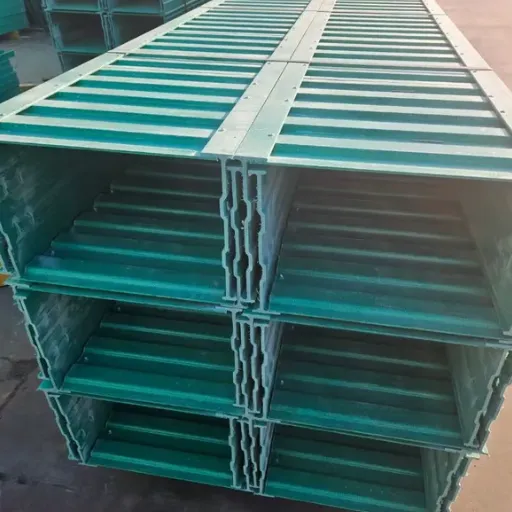
A pultruded cable tray is a cable support system manufactured from pultruded fiber reinforced plastic (FRP) profiles. The word "pultruded" describes the process: continuous glass fiber rovings are pulled through a resin bath, gathered into the final cross-section, and cured in a heated die. The result is a long, straight profile with a consistent wall thickness and the glass fibers aligned along its length.
Some buyers search for a fiberglass cable tray; that is the same material. FRP (fiber reinforced plastic) is the standard engineering term, and pultruded is the standard process for building it. The same pultrusion lines that make FRP grating and structural profiles produce the side rails and rungs of a pultruded cable tray.
Why does the process matter? Because the tray is the cheapest part of a cable system, yet its failure takes the whole line down. A corroded steel tray loses cross-section, sags, and eventually drops loaded cables onto equipment below. A pultruded cable tray removes that failure mode at the material level: the FRP itself is the corrosion barrier, so there's nothing to repaint and nothing to rust.
The pultrusion process also explains why cable trays built this way span farther than you might expect. Because the glass fibers run continuously along the profile, the side rails carry bending load efficiently. For a run over a dosing basin or between widely spaced supports, that directional strength is exactly what the spec calls for.
How Pultrusion Changes the Cable Tray
The pultrusion process is worth understanding before you specify, because it sets the mechanical properties of everything you buy.
Raw glass fiber rovings feed from creels into a resin bath, where they saturate with catalyzed resin. The wet bundle passes through a preformer that shapes it and squeezes out excess resin, then enters a heated die. Inside the die, heat cures the resin, and the profile emerges as a rigid, continuous shape that a puller draws at a steady speed. A saw cuts it to length at the end of the line.
Two things in that process decide quality. First, the resin-to-fiber ratio must be controlled; too little fiber and the profile lacks strength, too much resin and it lacks stiffness. Second, the die temperature and pull speed must stay steady; both affect how fully the resin cures and whether the profile holds its dimensions. A disciplined pultrusion line controls these parameters on every meter, not just on the first one.
That consistency is the difference between a pultruded cable tray that performs to its datasheet and one that surprises you in the field. A tray from a controlled line has uniform wall thickness, straight side rails, and predictable load data. A tray from an uncontrolled line may look identical and fail early, because the fiber wet-out was poor or the cure was incomplete.
What the buyer sees is a long, straight, lightweight profile that does not corrode. What the buyer should also see is a documented process, because the process is what makes the property claims real.
Types of Pultruded Cable Trays
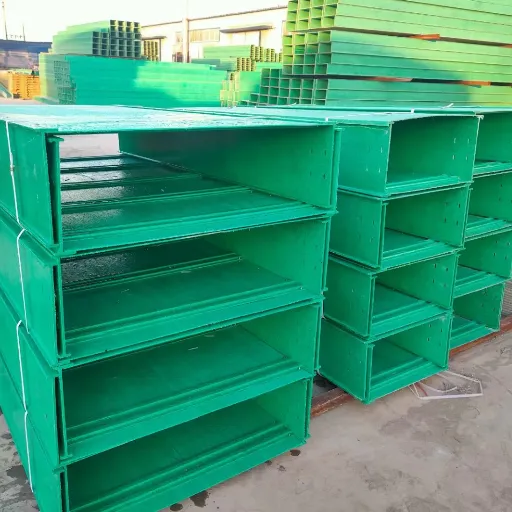
Pultruded cable trays come in three main constructions, plus a covered option. The right one depends on the cable type, the environment, and how much protection the cables need.
Ladder-Type Pultruded Cable Tray
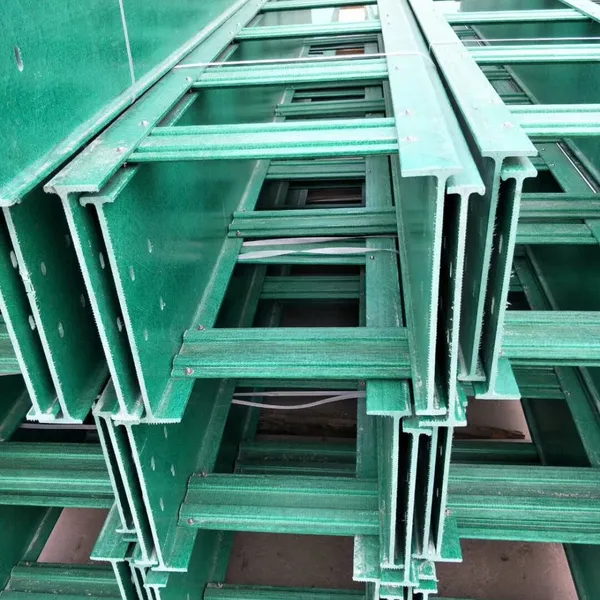
A ladder-type tray uses two pultruded side rails joined by rungs. The open design gives strong ventilation, which keeps heat away from power cables, and the long side rails handle the longest spans. Ladder construction is the common choice for power and control cabling in industrial plants and utility stations where cables are visible and cool running matters. An FRP cable ladder of this type is the specification most engineers start with for a corrosive plant.
Trough-Type Pultruded Cable Tray
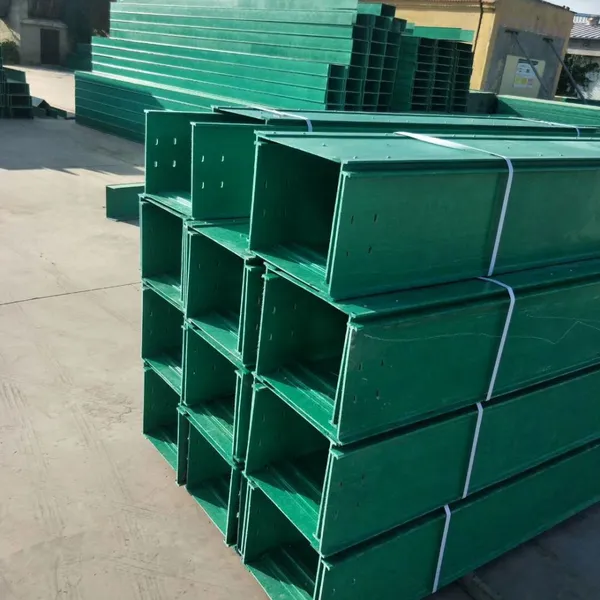
A trough-type tray has a continuous pultruded bottom that fully encloses the cables. That protects them from drips, dust, and falling debris, which makes it the standard pick over chemical dosing areas and in washdown environments.
Perforated Pultruded Cable Tray
A perforated tray gives the same full enclosure but adds drainage and airflow, so water never pools inside the run. For cable runs under condensation, sprinkler exposure, or outdoor rain, a perforated pultruded cable tray is the safer call than a solid trough.
Pultruded Cable Tray With Cover
Where a run needs maximum protection, pultruded trays accept snap-on covers that shield cables from UV, falling objects, and rain, and keep the run clean in dusty or outdoor service. For exposed outdoor routes, specify a cover rather than assuming open cable is acceptable.
| Tray Type | Best For | Protection Level |
|---|---|---|
| Ladder | Long spans, power cables, ventilation | Open, visible |
| Trough | Chemical dosing, dust, drips | Full enclosure |
| Perforated | Condensation, washdown | Full with drainage |
| With cover | Outdoor, UV, debris | Maximum |
Not sure which tray type fits your cable load? Our FRP cable tray product page covers ladder, trough, perforated, and covered options with dimensions and load data.
Pultruded Cable Tray vs Galvanized Steel
The comparison that matters on most projects is a pultruded cable tray against galvanized steel, because steel is the default most engineers reach for first.
Galvanized steel starts strong. The zinc coating is a sacrificial layer that protects the base steel, but in wet, chemical, or salt-laden air the zinc erodes quickly. Once it is gone, the steel rusts from the cut edges and rung connections inward. The tray loses section, the load rating drops, and rust flakes fall onto cables and equipment below.
A pultruded cable tray removes that failure mode. There's no coating to sacrifice, because the material itself resists corrosion. In a chemical plant or marine setting, pultruded FRP outlasts galvanized by a wide margin, with no painting and no rust repair.
The trade-off is upfront price. Steel is cheaper per meter. But the lifecycle cost flips in aggressive environments: steel needs recoating and replacement inside a decade, while a pultruded cable tray keeps working for decades with only cleaning.
| Factor | Galvanized Steel Cable Tray | Pultruded Cable Tray |
|---|---|---|
| Corrosion resistance | Low in wet or chemical service | High |
| Weight | Heavy | About 30% of steel |
| Electrical conductivity | Conductive | Non-conductive |
| Maintenance | Painting, rust repair | Minimal |
| Lifespan in corrosive areas | Years | Decades |
| Upfront cost | Lower | Higher |
For a dry indoor run with light cable load and no corrosion risk, steel may still be the right, budget-conscious choice. For a chemical plant, a coastal site, a washdown area, or anywhere electrical insulation matters, a pultruded cable tray wins on total cost over the asset's life. Industry publications such as CompositesWorld track FRP steadily displacing steel in corrosive service.
When Sofia's structural team designed an access run over aeration basins at a wastewater plant, the hanger spacing worked out to 3.5 meters. A profile with the fibers running in two directions would have needed an extra row of supports at that span. By switching to a pultruded cable tray with the glass fibers aligned along the length, she cut the support count by a third and simplified the steelwork above the basin. The client kept the design because the lighter structure cost less to build and less to maintain.
Load, Span, and Electrical Safety
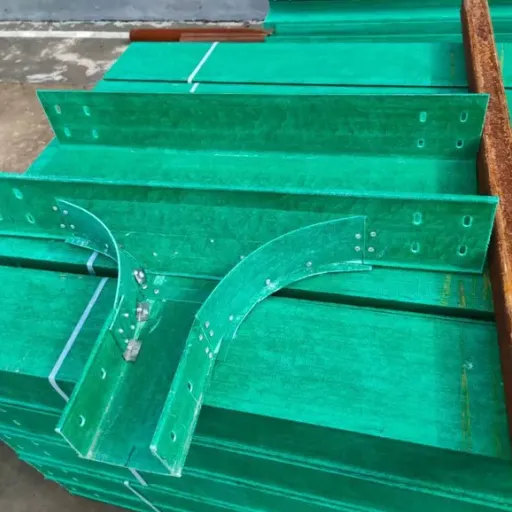
Cable trays carry their own weight plus the weight of the cables inside. Getting the span right is the difference between a tray that holds for decades and one that sags under its own load.
Ladder-type trays, with the side rails taking the bending, handle the longest spans. Trough and perforated trays are a little stiffer across the width but are supported at closer intervals. Every reputable manufacturer publishes a load and span chart for each profile. Match it to your actual support spacing, and remember that cable weight in a fully loaded tray is a live load that changes with every cable you add.
Pultruded FRP is electrically non-conductive and non-magnetic. With a steel tray, the support structure is conductive, so it must be bonded and grounded; any fault that energizes the tray turns the entire run into a live surface. With FRP, the tray stays an insulator, which simplifies grounding design near switchgear, transformers, and high-voltage bays, and reduces the risk of induced currents in large power installations.
For areas with flammable vapors or sensitive electronics, static-dissipative pultruded grades are available that bleed off static charge without becoming conductive. Pultruded cable trays can also be manufactured with fire-retardant resin systems that limit flame spread and smoke, which matters in tunnels, transit, high-rise risers, and any enclosed run where fire codes apply. Fire performance is measured against recognized standards: ASTM E84 is the common flame-spread test for building materials, and suppliers publish the class rating for their fire-retardant grade. For composite testing more broadly, ISO 527 covers tensile properties, while NEMA FG 1 and IEC 61537 govern cable tray design, load, and deflection testing.
Ask the supplier which standard their fire-retardant grade is tested to, and request the report rather than a marketing line.
Resin choice drives both chemical and fire performance. Polyester is the standard workhorse. Vinyl ester resists harsher chemicals and saltwater. Phenolic resin delivers the lowest smoke and flame spread for fire-rated areas. Match the resin to the environment and the code, not to the lowest price.
Where Pultruded Cable Trays Perform Best
Chemical and industrial plants: Over dosing areas, process lines, and tanks where steel corrodes within years and washdown is constant.
Water and wastewater treatment: Cable runs over basins, weirs, and chemical dosing equipment that stay wet and exposed to gas.
Marine and offshore: Cable support on piers, terminals, and platforms where saltwater attacks steel continuously.
Power and utility: Runs near switchgear, transformers, and high-voltage bays where a non-conductive tray removes grounding risk.
Tunnels and transit: Enclosed runs where fire-retardant grades and low smoke matter.
These applications share one trait: the environment shortens steel's life. Where that is true, a pultruded cable tray's higher upfront price is repaid through lower replacement and maintenance spend over the asset's life. For saltwater-specific selection, our marine and offshore solutions page goes deeper on deck and platform cable support.
Ready to compare your cable load against the right tray type? Send your run length, cable weight, and environment to our engineers and get a pultruded cable tray recommendation with load data, no obligation.
How to Choose a Pultruded Cable Tray Supplier
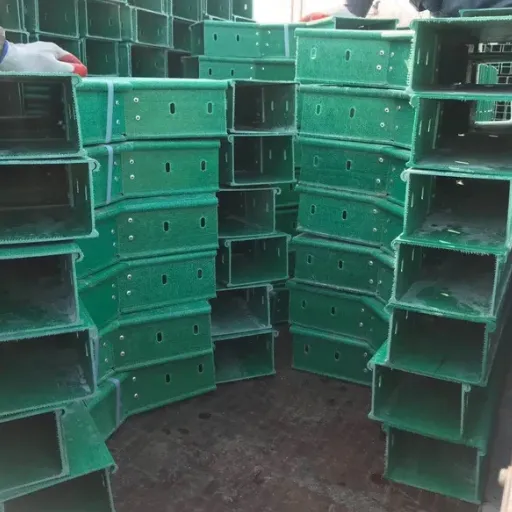
Corrosion resistance is only as good as the manufacturing process behind it. A tray made with off-spec resin or poor fiber wet-out will not last, no matter what the datasheet claims. Quality lives in the process, so that is where buyers should look.
A credible pultruded cable tray supplier runs three control gates:
Raw material inspection: Resin and glass fiber are checked before production. Old, contaminated, or off-spec material is rejected at the door.
In-process control: Pultrusion temperature, pull speed, and resin-to-fiber ratio are controlled to hit the rated mechanical properties on every meter.
Finished product testing: Trays are tested for tensile and compressive performance, corrosion resistance, and aging resistance, with results documented per batch.
Put these questions in your RFQ:
Which resin system is standard, and which grades do you offer for aggressive or fire-rated environments?
Can you provide a load and span chart for the exact profile and support spacing I need?
What finished product tests do you run, and can I see the batch reports?
Do you manufacture to international and EU engineering standards?
Can you produce custom lengths, cutouts, and covers to my drawings?
What is your MOQ and realistic lead time?
Diego, a procurement manager at a fertilizer terminal in Santos, Brazil, was replacing a corroded steel run above a urea handling line. He asked five pultruded cable tray suppliers for finished product test reports. Four sent glossy catalogs. One sent batch test data covering tensile, compressive, corrosion, and aging resistance, with resin and glass fiber certificates attached. He ordered from that supplier and requested a sample of the side-rail profile before production. The sample matched the datasheet within tolerance, which told him the process was real.
At Hengshui Ruibin New Materials LLC, we run full-process quality control to that standard. Resin and glass fiber are checked before production, pultrusion and curing are controlled, and every finished batch is tested and documented. If you want the evidence before you commit, request our FRP performance test data and compare it against any datasheet you receive. Our FRP cable tray buying guide walks through the full selection process in more detail.
Conclusion: Specifying a Pultruded Cable Tray With Confidence
The selection process comes down to five decisions:
Confirm the environment and match the resin system to it.
Pick ladder, trough, perforated, or covered construction based on cable type and protection needs.
Compare pultruded cable tray options against galvanized steel on lifecycle cost, not just meter price.
Confirm fire-retardant and static-dissipative grades against the standards your project requires.
Verify the supplier's QC: raw material inspection, in-process control, and finished product testing with documented reports.
A pultruded cable tray solves a real structural problem, but only when it is specified and sourced with care. Get those five decisions right and you buy a cable support system that outlives the equipment it feeds.
If you share your cable load, span, environment, and standards requirements with our engineers, we will confirm the right tray type, resin grade, and profile for your project and back it with documented test data. Request a quote and see what full-process QC looks like on paper.
Recently Posted
-
Corrosion-Resistant Cable Tray: The Complete Selection Guide
September 29, 2026Three months after the new electrical building came online at a coastal fertilizer plant in Cartagena, Elena found the first rust Read More
 -
FRP Cable Tray vs Galvanized Steel: The Complete Comparison
September 28, 2026In March 2026, the electrical supervisor at a fertilizer terminal near Veracruz, Mexico, watched his crew lift a 60-meter run of g Read More
 -
FRP Cable Ladder: Types, Benefits & How to Choose
September 24, 2026In March 2023, the maintenance supervisor at a coal-fired power plant in Sumatra pulled a 12-meter galvanized steel cable ladder o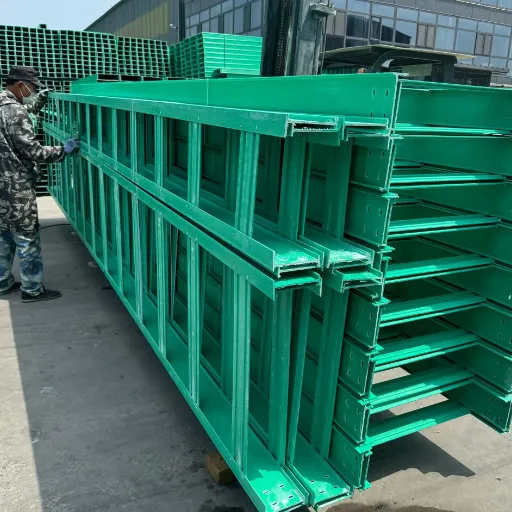 Read More
 -
FRP Cable Tray Guide: Types, Benefits & Sourcing
September 23, 2026On a humid Monday in June 2025, the maintenance crew at a coastal desalination plant in the Philippines found rust flakes scattere Read More

Contact Us
Recommended Products
-
 Corrosion Resistant Grating Board FRP Fiberglass Grating for Sidewalk FloorNegotiableMOQ: 100 Square Meters
 -
Outdoor Fiberglass Ladder Type FRP GRP Cable Tray for Industrial Cable SupportNegotiableMOQ: 50 Meters
-
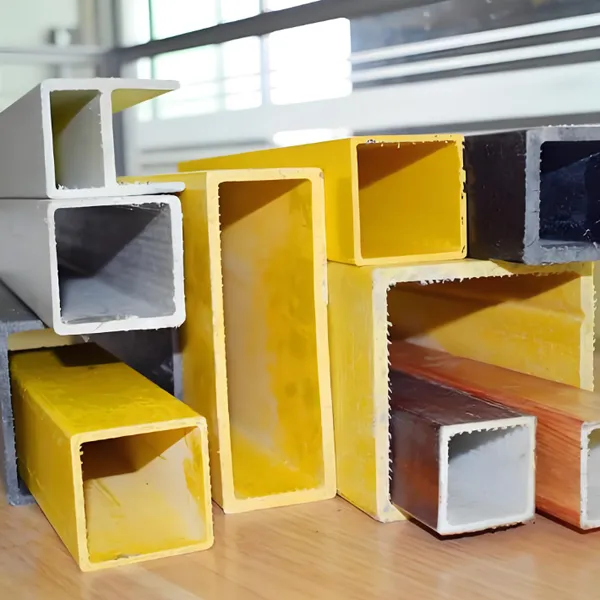
FRP Pultruded Box Section Profiles as Durable Building Material for ConstructionNegotiableMOQ: 300 Pieces
-
FRP/GRP U-Shape Trench Cover for Road Drainage ApplicationsNegotiableMOQ: 1 Set
-
Steel Grating Drainage Cover and Catwalk Walkway GratingNegotiableMOQ: 300 Square Meters
-
Sliding Neoprene Elastomeric Bridge Bearing Pad for Expansion Joints Low FrictionNegotiableMOQ: 1 Piece
-
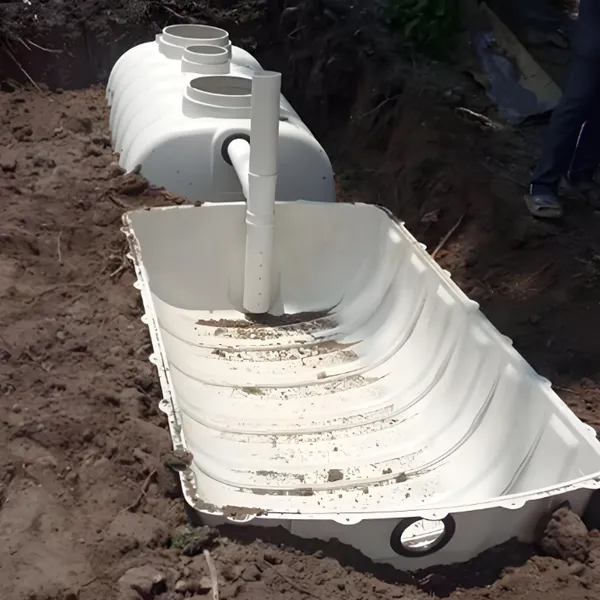
FRP Plastic Septic Tank for Chemical Plant School Hotel Hospital Sewage TreatmentNegotiableMOQ: 1 Set
-
Customized High Load Polymer Concrete Drainage Channel - OEM AvailableNegotiableMOQ: 1 Set
-
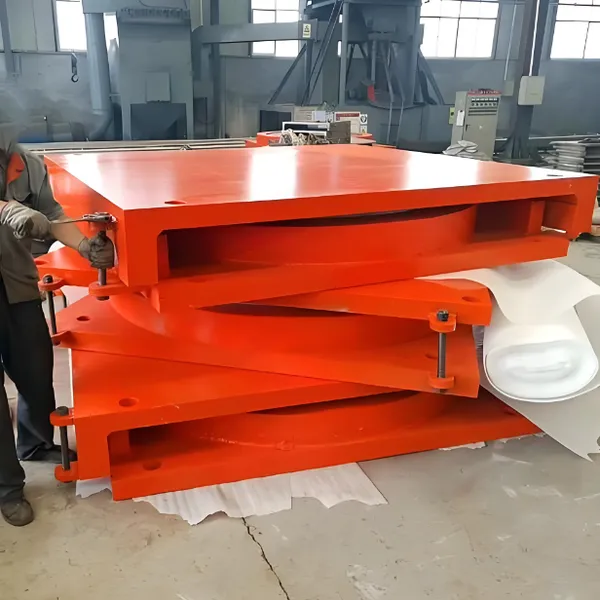
Pot Type Bridge Rubber Bearing Pad for Seismic Isolation and Shock Absorption SupportNegotiableMOQ: 50 Pieces
-
Outdoor FRP Ladder Cable Tray UV Stabilized GRP Fiberglass Ladder Tray for Solar Power StationNegotiableMOQ: 50 Meters
-
Anti-Aging FRP Fiberglass GRP Pultrusion Grating for Outdoor ApplicationsNegotiableMOQ: 100 Square Meters
-
China Manufactures High Performance Bridge Rubber Pot BearingNegotiableMOQ: 1 Piece
-
Weatherproof Structural FRP Square Rectangular Tube Pultruded Profile for Outdoor UseNegotiableMOQ: 300 Pieces
-
Isolation Spherical Bearing and Damping Pad for Bridge Seismic ProtectionNegotiableMOQ: 300 Pieces
-
Fiberglass FRP/GRP Biogas Septic Tank for Sewage Treatment and PurificationNegotiableMOQ: 1 Set
-
Fiberglass Reinforced Plastic Grating for Walkway Flooring, FRP GRPNegotiableMOQ: 100 Square Meters
-
C-Channel FRP/GRP Pultruded Profiles for Structural SupportNegotiableMOQ: 300 Pieces
-
High Durability Molded FRP Grating for Walkways, GRP FiberglassNegotiableMOQ: 100 Square Meters
-
Laminated Rubber Bearings for Bridge and Building Seismic Isolator ApplicationsNegotiableMOQ: 50 Pieces
-
FRP Fiberglass Ladder Cable Tray for Power Supply and Electrical Wiring SystemsNegotiableMOQ: 50 Meters